Jan. 28 Marks the Beginning of the End for Ron Kresha’s Legal Defense
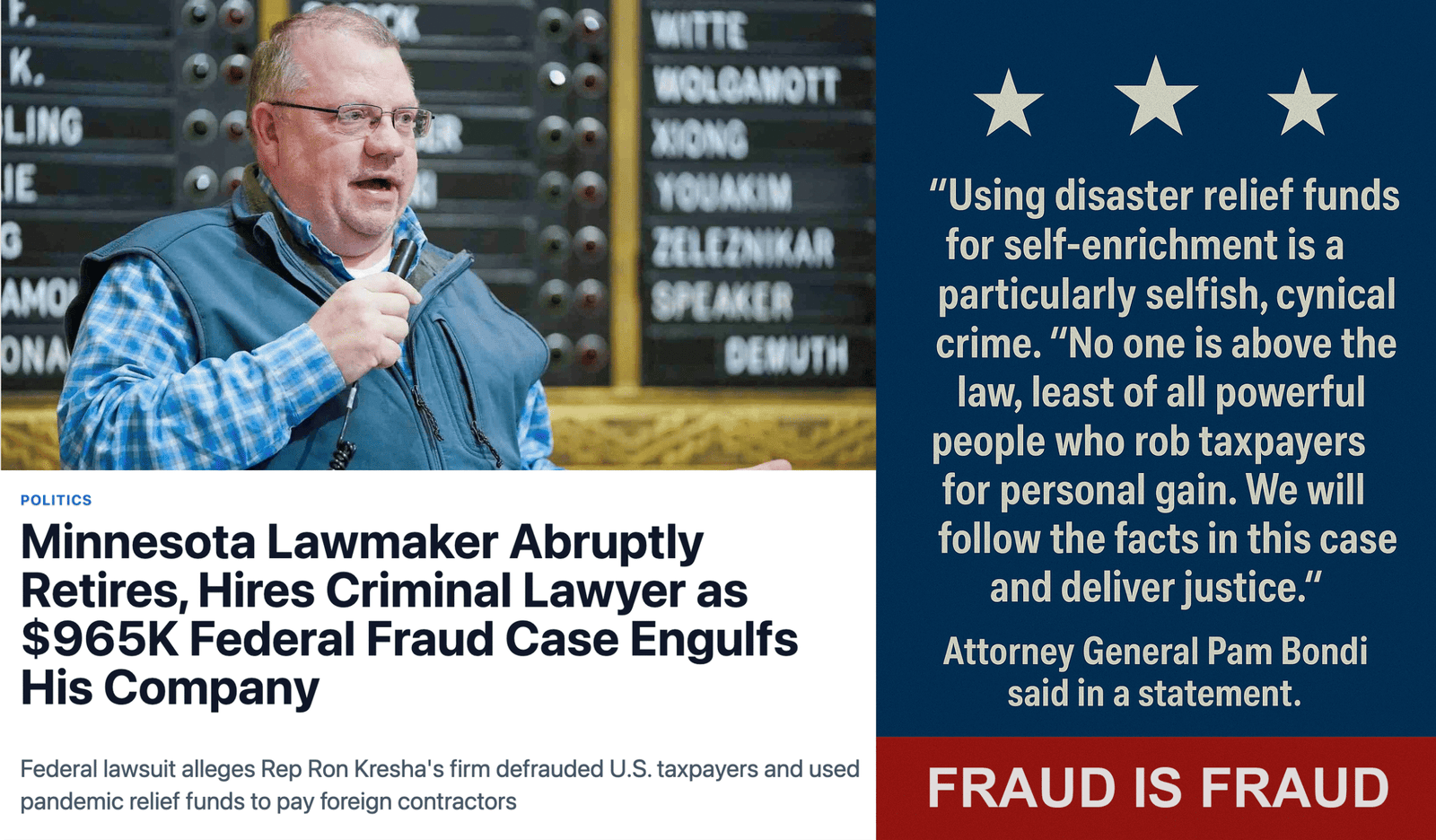
Little Falls, MN, January 21, 2026 — A federal judge will decide in eight days whether a high-stakes whistleblower lawsuit against Minnesota State Representative Ron Kresha and his company, Golden Shovel Agency, will move forward—potentially exposing the lawmaker to sworn depositions, compulsory document production, and financial penalties that could exceed seven figures.
If the judge allows the case to proceed, the parties will enter discovery. That phase authorizes subpoenas for internal records, emails, and financial documents—and permits depositions under oath. Discovery would focus on a central factual dispute: whether Golden Shovel Agency had 17–20 employees as represented on certain loan applications, or no employees, as reportedly stated in a prior 2020 deposition.
The False Claims Act authorizes severe civil remedies if liability is established, including:
Treble damages—up to three times the amount of alleged improper loans (reported at $321,892, which could exceed $965,000);
Per-claim civil penalties for each allegedly false application; and
Costs and attorneys’ fees, potentially shifting the government’s investigative expenses to the defendants.
No damages are imposed unless and until liability is proven in court.
A decision to move the case forward would likely heighten scrutiny within the Minnesota Legislature. Lawmakers have previously called for oversight hearings related to pandemic-relief fraud. While Rep. Kresha has announced his retirement, a progressing federal fraud case could loom large in discussions surrounding the 2026 election for Minnesota House District 10A.
Although the current action is civil, evidence developed during discovery can be reviewed by criminal authorities in separate proceedings. Any criminal investigation would be independent and would require its own findings.
The January 28 hearing represents a pivotal inflection point. A denial of the motion to dismiss would thrust Rep. Kresha and Golden Shovel Agency into the most invasive phase of federal litigation—one that carries substantial financial risk and prolonged public scrutiny. A grant of dismissal would end the case at the threshold.
The decision is expected to follow a January 28, 2026 hearing in U.S. District Court on a motion to dismiss. If the court denies the motion, the case will advance into full discovery under the federal False Claims Act (FCA), significantly escalating the legal, financial, and political stakes for Kresha.
The lawsuit—United States of America v. Golden Shovel Agency, LLC—alleges that Golden Shovel Agency submitted false information on pandemic-era loan applications.
What a Jan. 28 Decision Could Trigger
Compelled Discovery and Sworn Testimony
If the judge allows the case to proceed, the parties will enter discovery. That phase authorizes subpoenas for internal records, emails, and financial documents—and permits depositions under oath. Discovery would focus on a central factual dispute: whether Golden Shovel Agency had 17–20 employees as represented on certain loan applications, or no employees, as reportedly stated in a prior 2020 deposition.
Significant Civil Exposure Under Federal Law
The False Claims Act authorizes severe civil remedies if liability is established, including:
Treble damages—up to three times the amount of alleged improper loans (reported at $321,892, which could exceed $965,000);
Per-claim civil penalties for each allegedly false application; and
Costs and attorneys’ fees, potentially shifting the government’s investigative expenses to the defendants.
No damages are imposed unless and until liability is proven in court.
Intensifying Political and Ethical Scrutiny
A decision to move the case forward would likely heighten scrutiny within the Minnesota Legislature. Lawmakers have previously called for oversight hearings related to pandemic-relief fraud. While Rep. Kresha has announced his retirement, a progressing federal fraud case could loom large in discussions surrounding the 2026 election for Minnesota House District 10A.
Potential for Criminal Review
Although the current action is civil, evidence developed during discovery can be reviewed by criminal authorities in separate proceedings. Any criminal investigation would be independent and would require its own findings.
The Bottom Line
The January 28 hearing represents a pivotal inflection point. A denial of the motion to dismiss would thrust Rep. Kresha and Golden Shovel Agency into the most invasive phase of federal litigation—one that carries substantial financial risk and prolonged public scrutiny. A grant of dismissal would end the case at the threshold.
###